History
Origins and the House of Zuazo
Paradinas received its name during the medieval resettlement. The new village was built upon the foundations and ruined walls of an ancient Roman villa (from the Latin parietinae, meaning ‘ruined walls’).
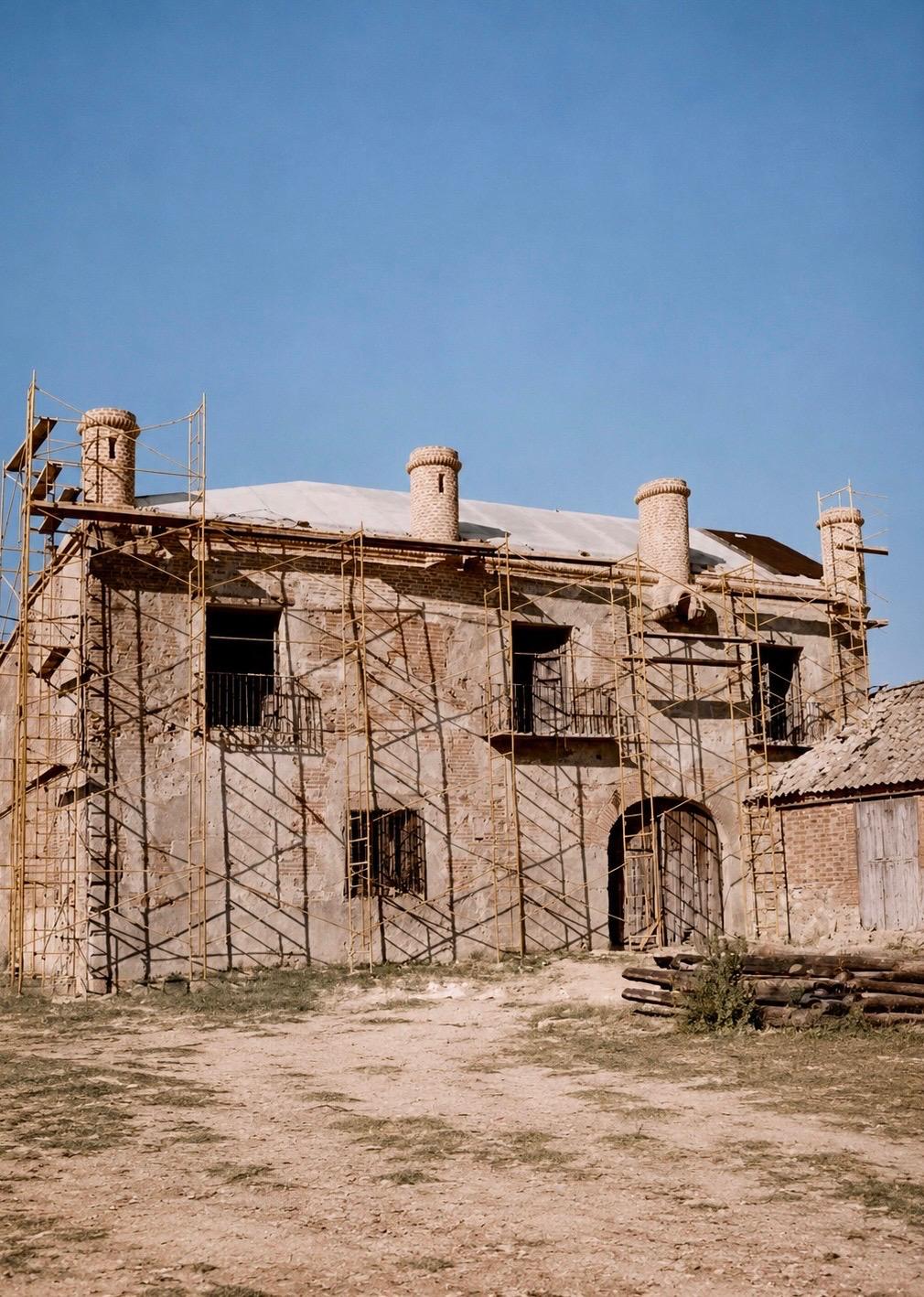
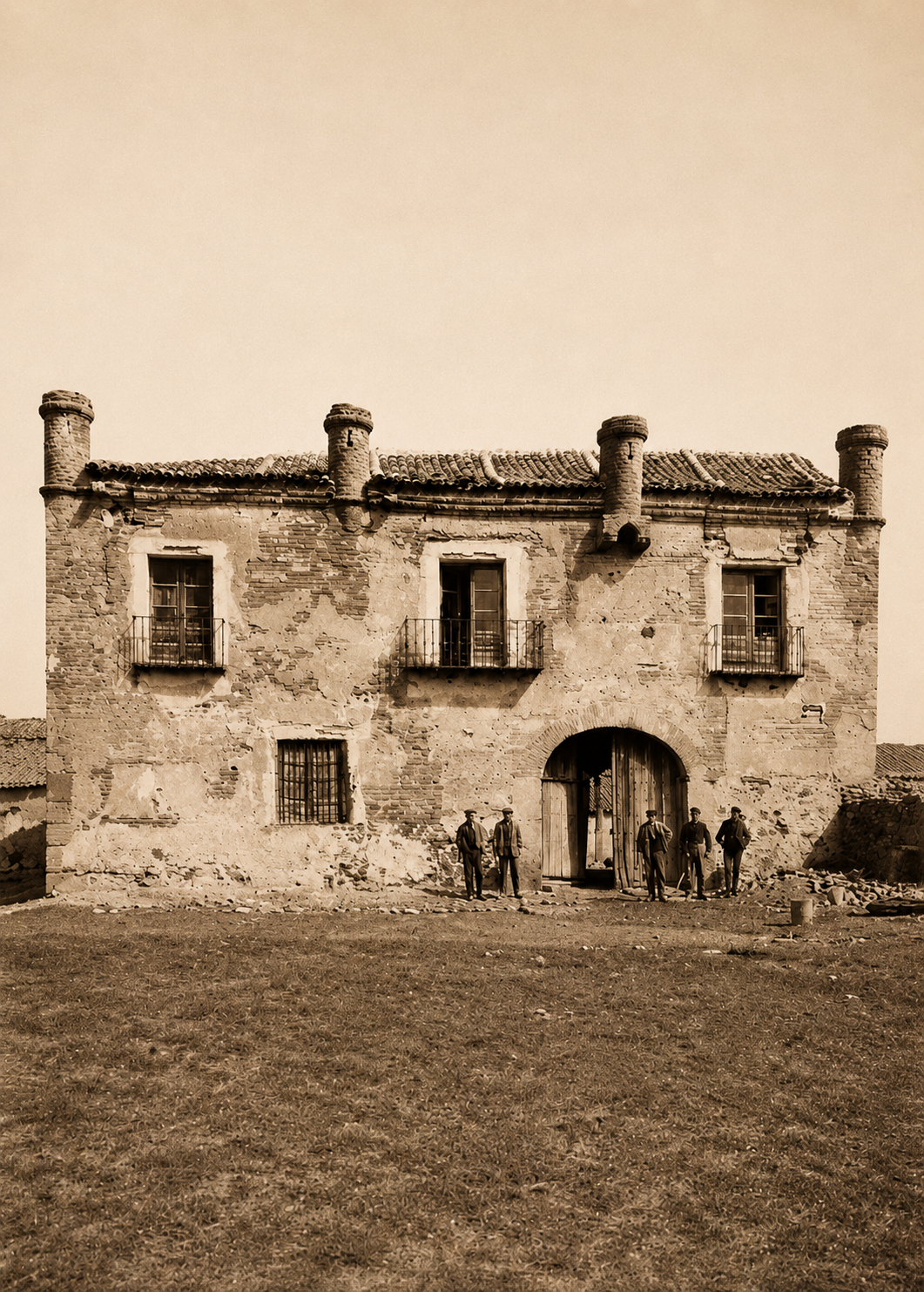
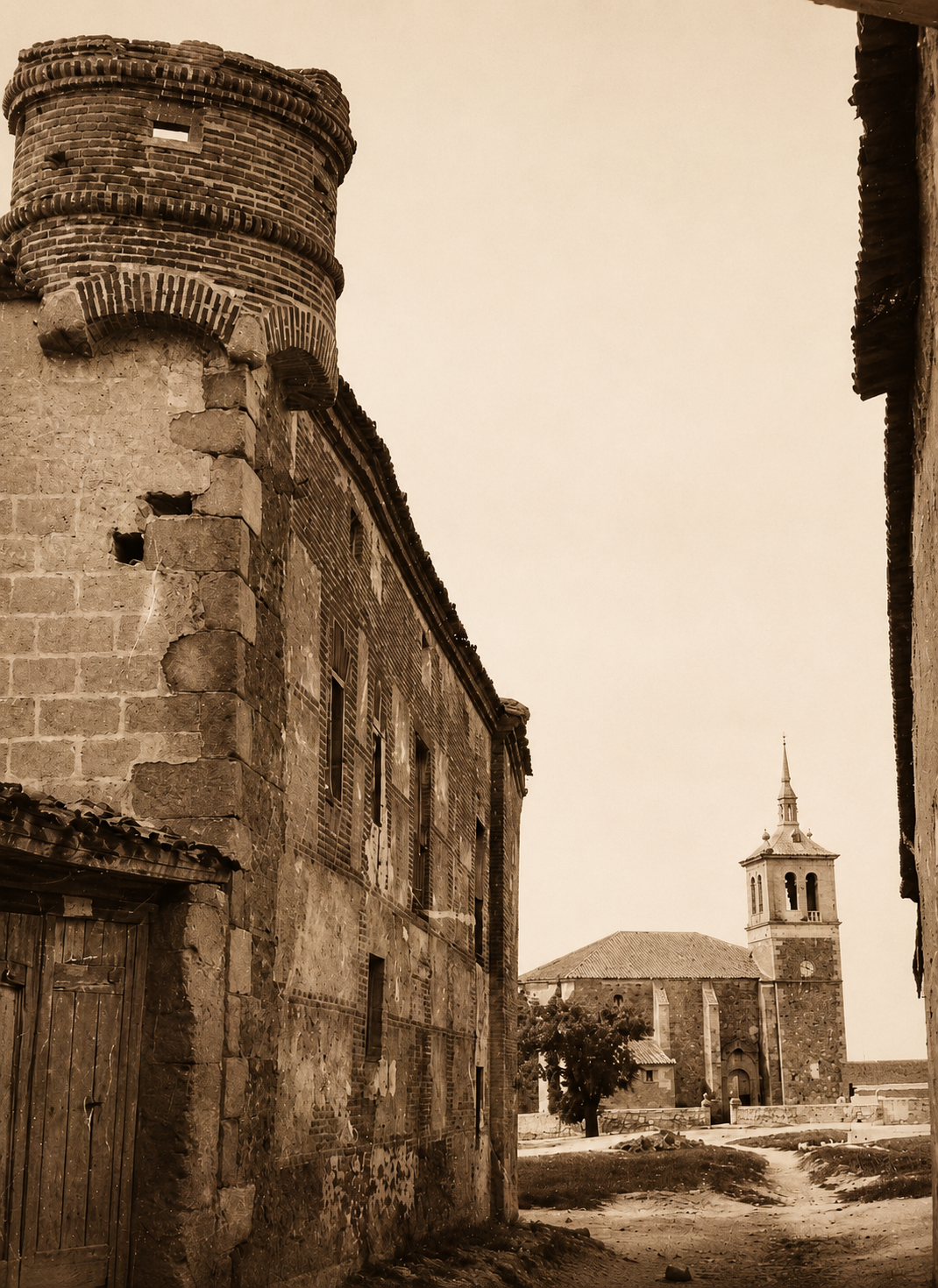
The Zuazo family built the Palace during the 15th century. Its fortified appearance was largely ornamental rather than defensive, as it was conceived as a noble residence connected to the family’s landed estates.
Alonso de Zuazo was born at the palace. He became a key figure in colonial history: predecessor to Hernán Cortés as Governor of New Spain and later Governor of Santo Domingo. He also founded the Hospital de Santa Ana in Paradinas.
The Renaissance and social life at the palace
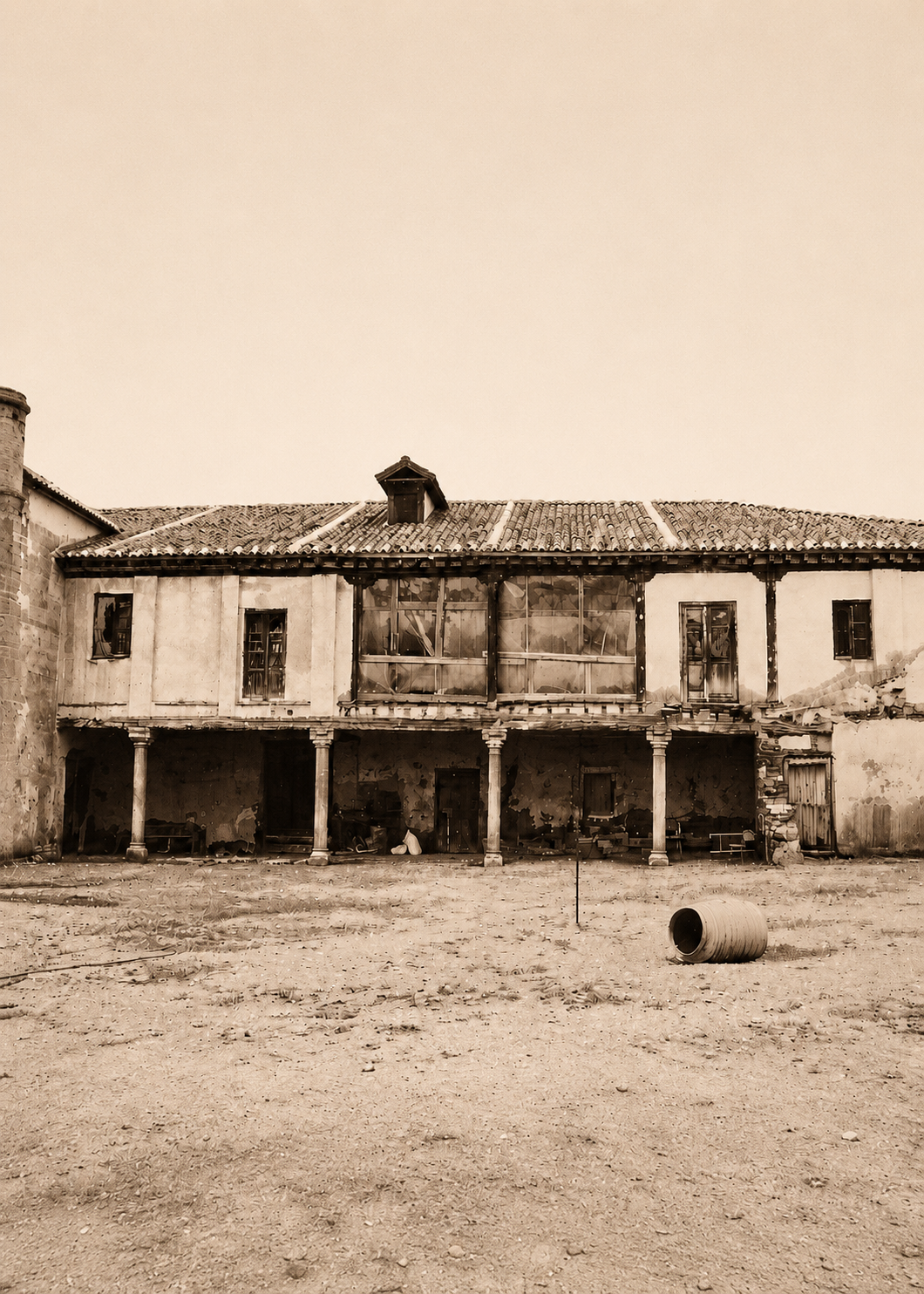
Alterations were carried out that introduced Renaissance elements to the Palace, including the granite columns and simple capitals that can still be seen in the courtyard today.
The palace witnessed the severity of the plague. That year, a servant of Magdalena de Lezcano named Alarcón died in the building.
The wedding of María García, a servant of Antonio Jiménez de Zuazo, was held at the palace, offering a glimpse into everyday life on the estate.
Ana Magdalena de Zuazo married Miguel de Losa y Orozco at the palace. The Zuazo family retained its influence in the area until the middle of the 17th century.
Succession and conflict
Jerónimo Arias de Virués y Cárdenas, great-grandson of Ana Osorio and the twelfth holder of the estate, took up residence at the palace and installed the Osorio-Virués coat of arms.
Pedro Arias died without issue, prompting numerous claims to ownership of the palace. After decades of dispute, judgement was given in favour of the Marchioness of Zafra.
During the conflict against the French, troops left a wounded soldier at the local hospital, making the site a witness to the war.
Ownership of the palace, together with patronage of the hospital, continued to pass through the direct line under the entailed-estate system of mayorazgo, as recorded in documents dated July of that year.
Recent history and the present day
Cipriano Cecilia Hernán-Gómez acquired the Palace and remodelled it completely to accommodate horse-breeding activities.
Marcos Llorente Illera purchased the building and carried out a series of crucial interventions to halt its deterioration.
The Palace was sold to a company with plans to convert it into terraced houses. The proposed development was ultimately never carried out.
Following the restoration of the building, the Palace reopens its doors as a hotel a place where guests can rest, unwind and escape the pace of everyday life.